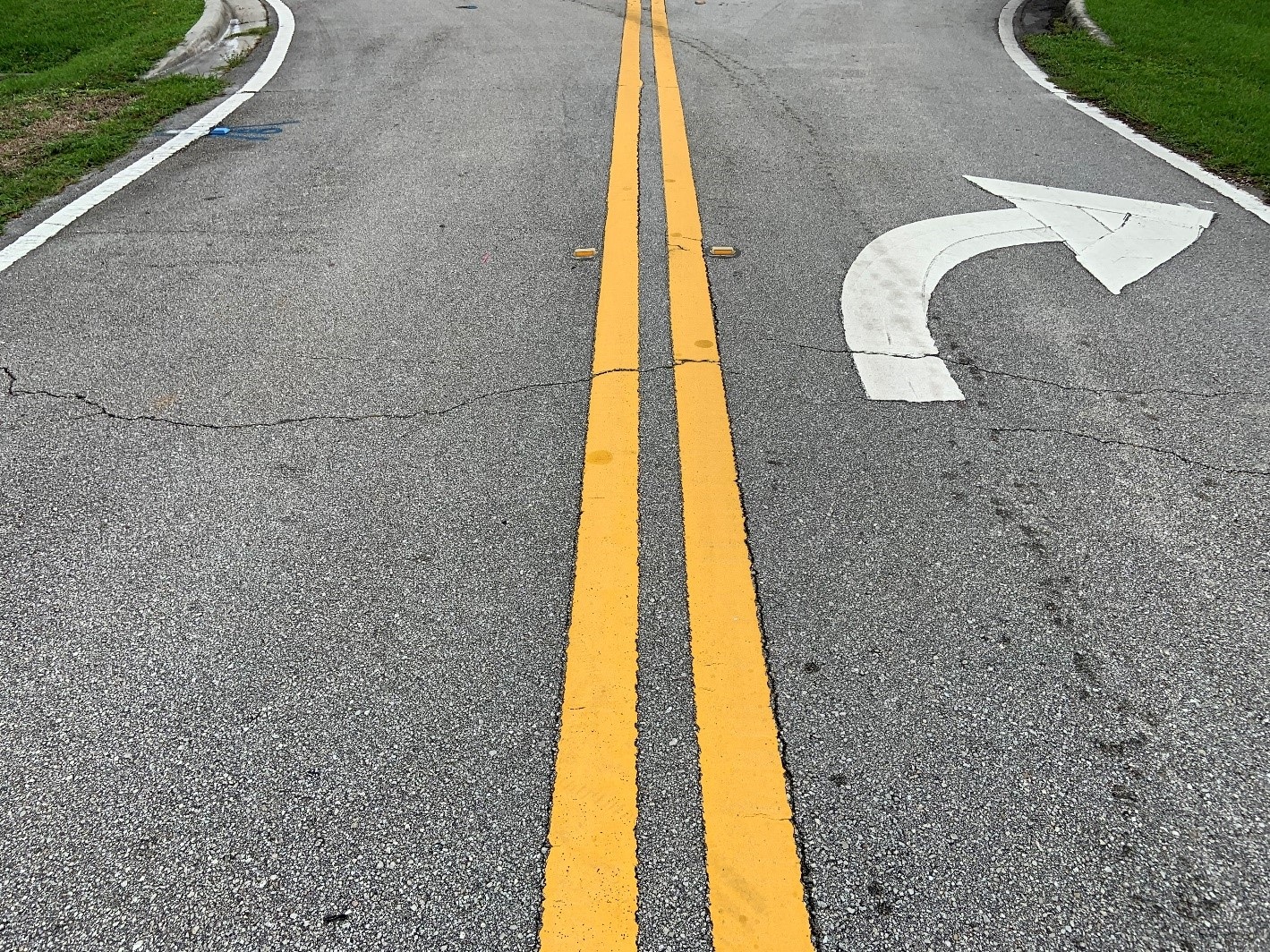
Reflection Cracking & Block Cracking
These are lines or patterns you often see on neighborhood streets. They happen when the asphalt on top reflects the cracks in the hardened base underneath.
In Port St. Lucie, most residential streets were originally built with a soil‑cement base. Because of this, the cracks in the base will naturally “show through” the asphalt — sometimes even a short time after resurfacing.
Good news: This type of cracking is normal and harmless. It does not mean the road is failing, and it does not require repair. It’s simply the base layer showing through the top layer.

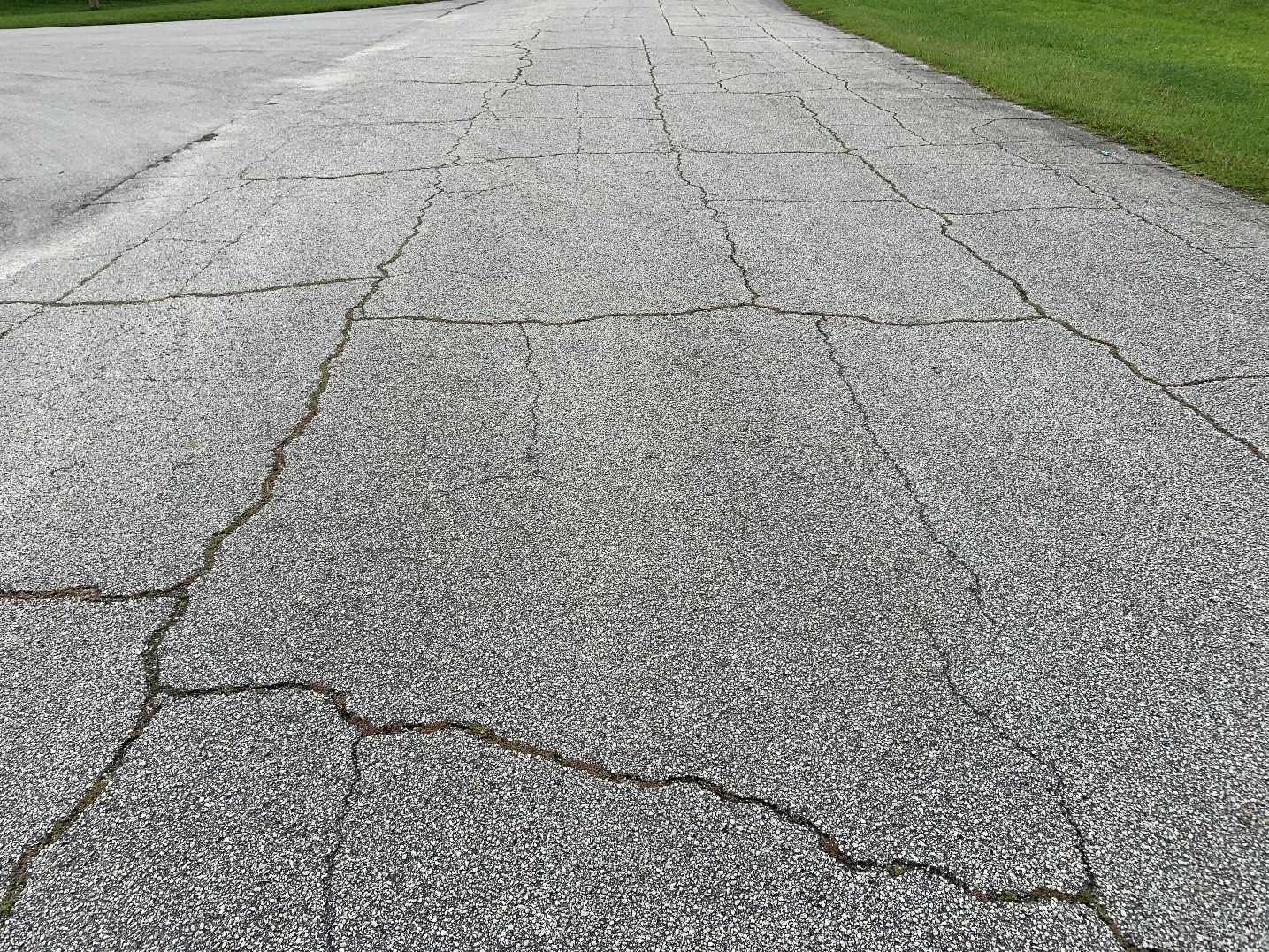
Fatigue Cracking (Alligator Cracking)
Fatigue cracking usually appears in areas that get a lot of repeated traffic — especially from heavier vehicles. At first, it may look like a series of small, connected cracks. Over time, it forms a pattern that looks like alligator skin.
This type of cracking is more common on busier roads than on neighborhood streets and often shows up along with other pavement issues.

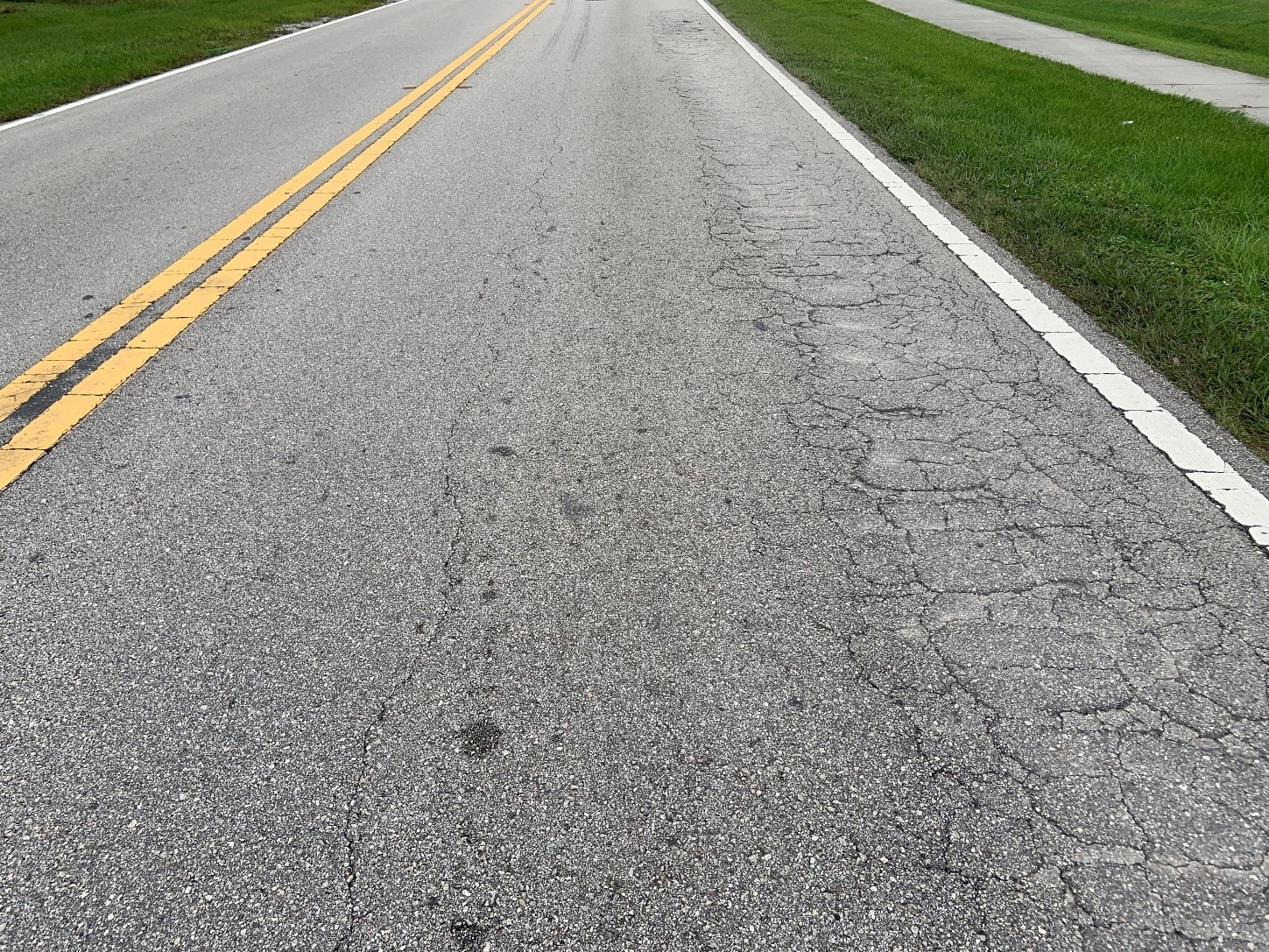
Edge cracking
Edge cracking is found along the outer edges of pavement, especially where roads do not have curb and gutter. You may see:
- Crescent‑shaped cracks
- Long cracks running close to the pavement edge
These cracks can also appear in areas where the asphalt has been overlaid and now sits slightly higher than the curb.
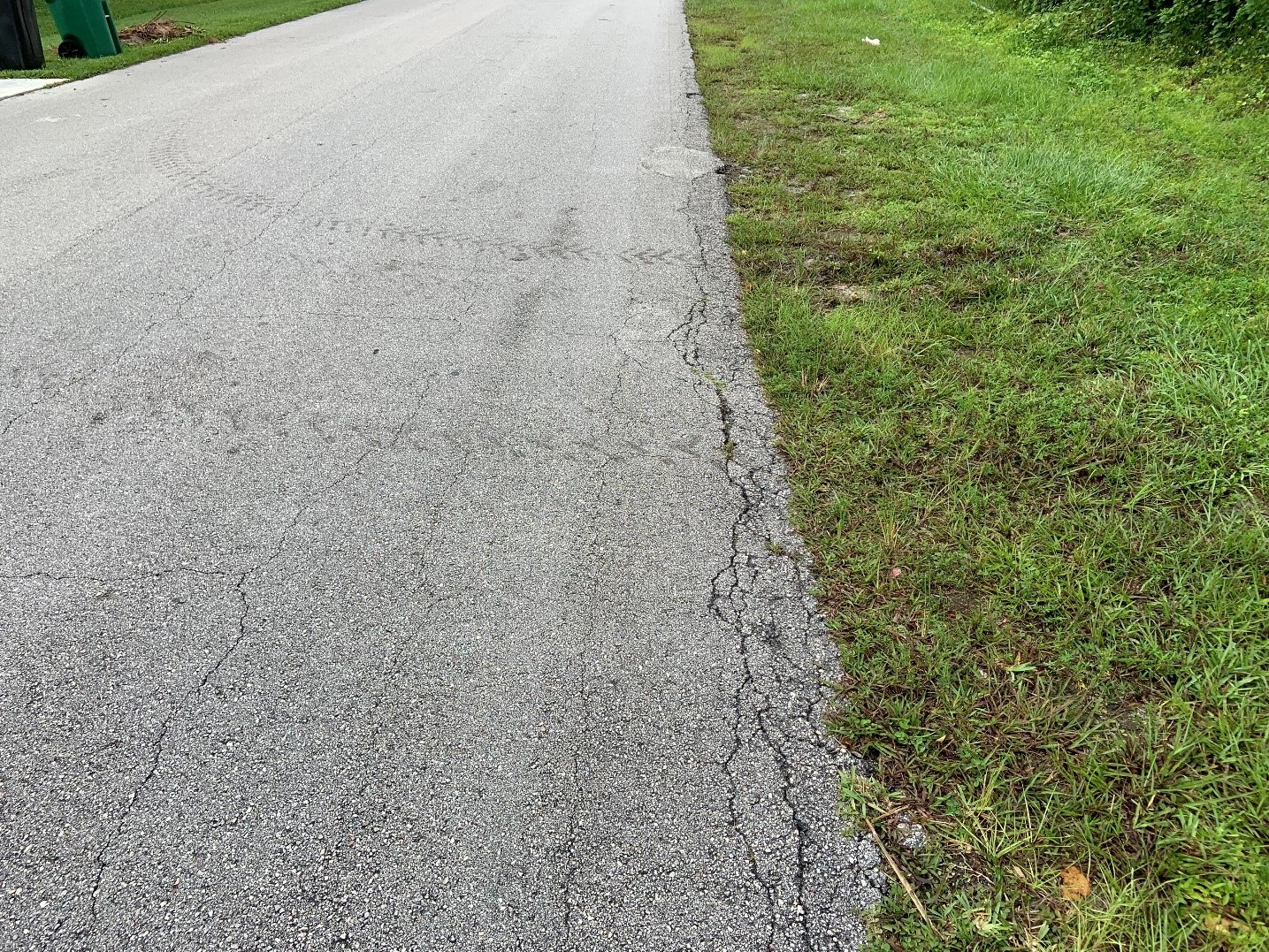
Longitudinal cracking
These cracks run parallel to the center of the roadway. They can appear in the wheel paths or between lanes and are typically found on streets built with curb and gutter and a non–soil‑cement base.

Transverse cracking
Transverse cracks run across the road — perpendicular to the centerline. They often occur when the pavement expands and contracts with temperature changes.